

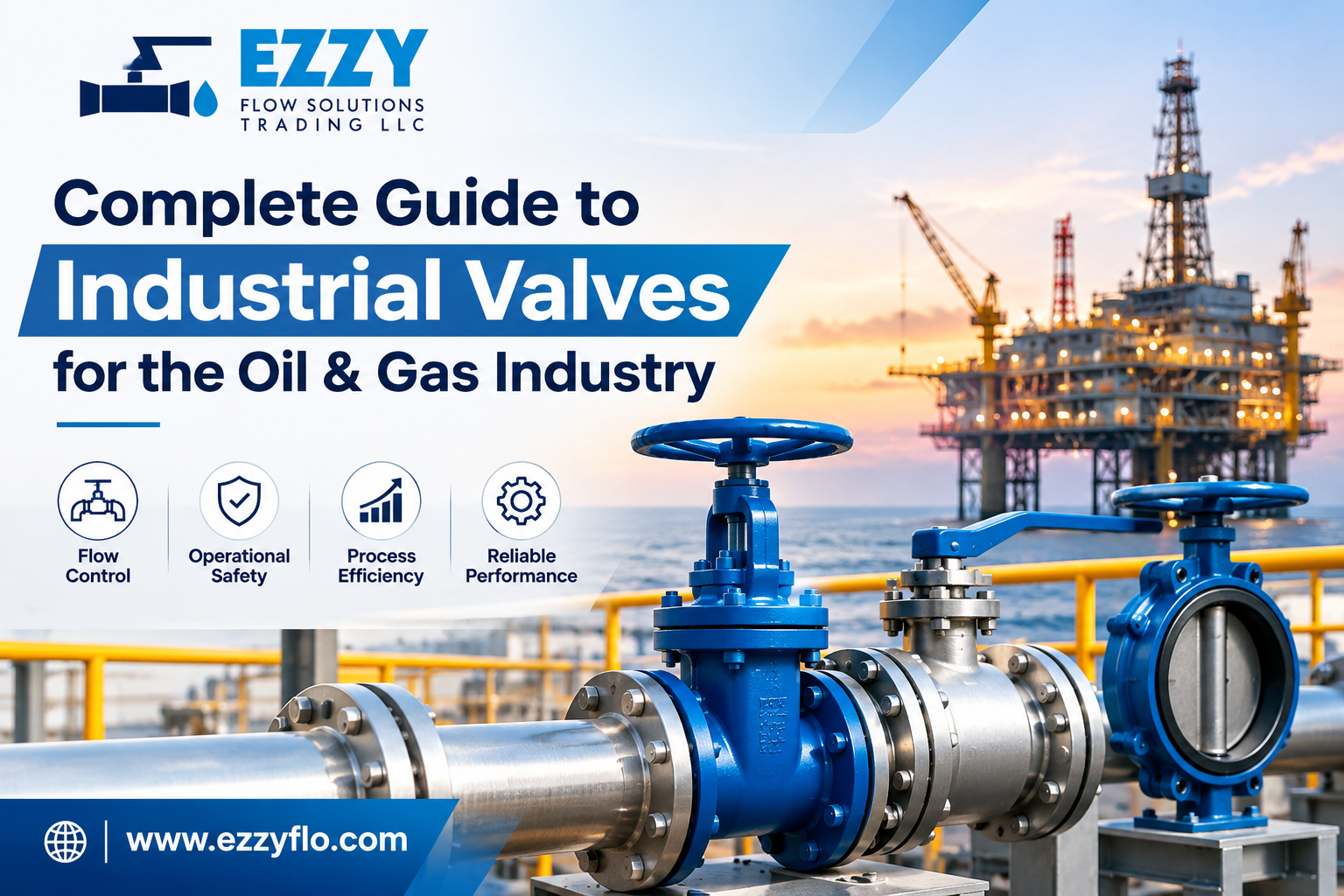
Industrial Valves for Oil and Gas Industry
Industrial valves play a critical role in oil and gas industry by moving, processing and controlling the media flow. Various types of valves are needed in oil and gas production processes to control flow of fluids. From upstream exploration to downstream refining, the right valves help maintain operational safety, improve efficiency, and reduce the risk of leaks and equipment damage. The choice of valves used in industrial projects should take into consideration various aspects including type of valves and material used in valve construction among other aspects. Understanding these options helps oil and gas companies select suitable valves for reliable performance.
What Are Industrial Valves and Why Are They Important in Oil & Gas?
Industrial valves refer to mechanical devices that are used to start, stop, direct or control flow of liquid and gas within a piping system. Depending on the type of valves that have been used, valves can prevent reverse flow of fluid as well as pressure control.
The selection of various types of valves used in oil and gas production is dependent on the specific process requirement, pressure, and temperature among other factors.
Valves are necessary in the following processes:
• Prevention of backflow: Check valves are helpful in ensuring that fluids cannot flow in the reverse direction.
• Regulation of pressure: Pressure control valves along with their related systems are useful in regulating operating pressure within defined limits.
• Safety operation: Appropriate valves will help in safe shut down, equipment protection and process isolation when included in appropriate safety systems.
Types of Industrial Valves Used in the Oil & Gas Industry
Different industrial valves perform specific functions in oil and gas operations, from isolating pipelines to regulating flow and preventing backflow. Selecting the right valve depends on the fluid, operating pressure, temperature, and process requirements.
Gate Valves for Pipeline Isolation
Gate valves use a movable gate to start or stop fluid flow. When fully open, they provide a relatively unrestricted flow path, making them suitable for pipeline isolation, transmission systems, and oil and gas processing facilities. However, they are generally not designed for flow throttling, as partial opening can cause wear and damage.
Ball Valves for Fast Shut-Off
Ball valves use a rotating ball with a bore to control flow. A quarter-turn operation allows quick opening and closing, making them useful in pipelines, storage facilities, and process systems requiring reliable shut-off. Their limitations may include seat wear, pressure-related torque requirements, and suitability concerns for certain high-temperature or abrasive services.
Globe Valves for Flow Regulation
Globe valves regulate flow by moving a disc against a stationary seat, allowing precise adjustment of the flow rate. They are commonly used in process control systems and applications requiring frequent flow regulation. However, their design creates a higher pressure drop than many full-bore valves, which may affect energy efficiency.
Check Valves for Backflow Prevention
Check valves allow fluid to flow in one direction and close automatically when reverse flow occurs. Industrial check valves help protect pumps, compressors, and pipelines from backflow. Common types include swing, lift, and dual-plate check valves. Their performance depends on flow conditions, installation orientation, and closing characteristics; unsuitable selection can cause pressure surges or valve chatter.
Butterfly Valves for Large-Diameter Piping
Butterfly valves use a rotating disc to control or isolate flow. Their compact design, relatively low weight, and quick operation make them useful in large-diameter pipelines, utility systems, and selected industrial processes. However, pressure, temperature, sealing requirements, and fluid compatibility must be considered before selecting a suitable design.
Plug Valves for Isolation and Flow Diversion
Plug valves use a rotating plug with a passage through it to open, close, or redirect fluid flow. They are used in selected oil and gas pipelines, process systems, and applications involving certain viscous or contaminated fluids. Limitations can include operating torque, sealing requirements, and wear or corrosion depending on the fluid and valve design.
Control and Pressure Relief Valves
Control valves automatically regulate flow, pressure, or other process variables in response to signals from a control system. They help maintain stable operating conditions in oil and gas processing plants. Pressure relief valves, by contrast, open under specified pressure conditions to release excess pressure and protect equipment. Both require correct sizing and selection for the application; pressure relief valves must meet the relevant design, capacity, and safety requirements.
Important selection note: Not every valve type is suitable for every oil and gas application. Before choosing a valve, consider the operating pressure and temperature, fluid composition, corrosion and erosion risks, required flow characteristics, applicable industry standards, and the manufacturer’s specifications.
Applications of Industrial Valves across Oil & Gas Operations
Industrial valves find application in the entire spectrum of oil and gas industries. Design and specifications of industrial valves vary depending on operating conditions and their applications.
Upstream: Exploration and Production
Upstream sector involves exploration and production of crude oil and natural gas. Valves are utilized in the wellheads, production manifolds and separation plants along with other equipment.
Where the pressure ratings, materials, and construction of the gate valves and ball valves are compatible with the project requirements, they may be used for isolation purposes. Control valves can control the fluid flow in an appropriate process system, while check valves assist in preventing reverse flow.
For upstream processes, high pressures, abrasive fluids, hydrogen sulfide and more could be present. Thus, valves should conform to the project requirements in terms of pressure ratings, temperatures, and material. There is also special equipment like wellheads that will need product compliance and certification.
Midstream: Pipeline transportation and Gas transportation
Midstream activities transport crude oil, refined products and natural gas using pipelines, pumping stations and compressor stations. Valves allow isolating the pipeline sections for maintenance purposes and controlling the fluid movements.
The ball valves designed for oil and gas pipeline systems are commonly used as on-off isolation valves since most ball valves have a good shut-off ability and quick operation. The gate valves designed for oil and gas systems are used for isolation where appropriate.
Downstream: Refineries and Petrochemical Plants
Refineries and petrochemical plants refine crude oil and gases to various fuels and chemicals. Such facilities include an intricate piping network that works under different temperature and pressure parameters.
Offshore Platforms and LNG Facilities
Offshore plants are subjected to the moisture, salt, and corrosive conditions of the marine atmosphere. The valves must be made in accordance with the process fluids and environment exposure, with adequate materials, coatings, and protective systems as applicable.
Liquefied natural gas (LNG) plant works on natural gas at cryogenic temperatures. The valves in use in such installations have specific requirements in terms of material and design to withstand low-temperature operations.
Seat sealing, thermal contraction, material toughness, and testing are some of the factors that need to be considered in LNG.
For offshore and LNG applications, valve specifications have to be considered in conjunction with the engineering design and operating conditions of the project prior to procurement.
Common Materials Used in Oil & Gas Valves
The material plays a vital role in the strength, resistance to corrosion and wear, durability, and compatibility of the process fluid of the valve.
Carbon Steel and Alloy Steel
Steel is a popular choice in the fabrication of industrial valves, including oil and gas valves. It provides high strength in the material and comes in various grades according to the pressure and temperature.
Alloy steels have other elements added which may enhance various properties, including high-temperature strength and the ability to withstand certain environments. They can be specified for challenging refinery and processing services.
The chosen grade should comply with the appropriate material specification and design requirements.
Stainless Steel and Duplex Stainless Steel
Stainless steel gives corrosion resistance in many industrial applications. This type of steel can be used in cases when more corrosion resistance is required than that offered by carbon steel due to process fluids or environmental conditions.
Duplex stainless steel combines the properties of austenitic and Ferrite stainless steels. Selected grades can offer higher strength and resistance to particular types of corrosion and thus become relevant for some offshore and process services.
Nevertheless, there is no material suitable for all environments. The choice of material grade shall take into consideration the concentration of chlorides, temperature, fluid composition and possible corrosion mechanisms.
Valve Seats, Seals and Trim Materials
Valve seats and seals contribute to achieving the required shutoff performance, while the trim affects the wear resistance and corrosion performance.
Depending on the service, the components may be made of engineered polymers, elastomers and metal seats.
Important Industrial Valve Standards for Oil & Gas
Industrial valve standards help ensure that valves are designed, manufactured, inspected, and tested according to defined technical requirements. In the oil and gas industry, selecting valves that meet the applicable standards is important for operational safety, reliability, and regulatory compliance. The required standards depend on the valve type, service conditions, and project specifications.
API 6D for Pipeline Valves
API Specification 6D covers requirements for the design, manufacturing, testing, and documentation of valves used in petroleum and natural gas pipeline systems. It applies to specified valve types, including ball, gate, check, plug, and axial valves. It is particularly relevant when selecting valves for pipeline transportation and isolation applications.
API 600 and API 602 for Applicable Gate Valve Designs
API 600 specifies requirements for steel gate valves with flanged or butt-welding ends and bolted bonnets. API 602 covers gate, globe, and check valves in smaller sizes, generally DN 100 (NPS 4) and below, for petroleum and natural gas industries. The appropriate standard depends on the valve design, size, connection type, and project requirements.
API 598 for Valve Inspection and Testing
API 598 establishes requirements for valve inspection, examination, and pressure testing for covered valve types, including gate, globe, ball, plug, check, and butterfly valves. It helps verify valve integrity and sealing performance through specified tests. The applicable acceptance criteria and testing requirements depend on the valve type and relevant specification.
ASME B16.34 for Valve Design and Pressure-Temperature Ratings
ASME B16.34 covers key requirements for valves with flanged, threaded, and welding ends, including pressure-temperature ratings, materials, dimensions, testing, and marking. It helps engineers assess whether a valve is suitable for the intended operating conditions. The permitted pressure and temperature combinations depend on the valve’s material, rating, and applicable requirements.
NACE MR0175 / ISO 15156 for Sour-Service Materials
NACE MR0175 / ISO 15156 addresses the selection and qualification of metallic materials used in oil and gas production environments containing hydrogen sulphide (H₂S), where cracking and other material failures may present safety risks. It helps determine material suitability for sour-service conditions. Material selection depends on factors such as H₂S exposure, environmental conditions, material properties, and the relevant parts of the standard.
How to Choose the Right Industrial Valve for Oil & Gas Applications
Choosing the right industrial valve is essential for safe and efficient oil and gas operations. The selection process should consider operating conditions, fluid properties, installation requirements, and applicable industry standards. A suitable valve can help improve reliability, minimise leakage risks, and reduce maintenance needs.
Operating Pressure and Temperature
Check the system’s maximum and minimum operating pressures and temperatures before selecting a valve. The valve body, seals, and internal components must be suitable for the expected conditions, including pressure fluctuations and temperature changes.
Fluid Type and Chemical Compatibility
Identify the fluid passing through the valve, such as crude oil, natural gas, steam, or chemical mixtures. Consider corrosion, erosion, viscosity, and the presence of hydrogen sulphide or other contaminants. Selecting compatible body and sealing materials helps reduce premature wear and leakage.
Valve Size and Pressure Class
Choose a valve size that matches the pipeline and required flow capacity. The pressure class must also be suitable for the operating conditions. A valve’s nominal size or pressure class alone does not establish its suitability; pressure-temperature ratings and the specific design must be verified.
End Connections and Installation Requirements
Industrial valves are available with flanged, threaded, butt-weld, and socket-weld connections, depending on the design and application. Select connections compatible with the pipeline specifications, available installation space, maintenance requirements, and applicable standards.
Leakage, Fire-Safe and Emissions Requirements
For oil and gas applications, leakage control is particularly important because escaping hydrocarbons can create safety and environmental risks. Depending on the service, valves may need fire-safe design qualification, low-emission performance, or specific seat-leakage criteria. Verify the relevant testing requirements and certifications rather than assuming every valve provides these features.
Manual vs Pneumatic vs Electric Actuation
Manual valves are suitable for applications where operation is infrequent and local access is available. Pneumatic actuators are often used where rapid operation or integration with automated control systems is required. Electric actuators can support remote operation and precise positioning in suitable applications. The choice depends on operating frequency, available utilities, control requirements, hazardous-area classification, and fail-safe needs.
Certification, Testing and Documentation
Before purchasing an industrial valve, review the applicable design standards, inspection and testing requirements, material certificates, and product documentation. Depending on the project, this may include pressure-test reports, material traceability records, and relevant fire-safe or emissions qualification documents. Confirm that the supplied valve meets the project’s specifications and applicable regulatory requirements.
Final tip: Work with an experienced industrial valve supplier to verify the valve type, materials, pressure-temperature ratings, actuation, and applicable standards for your specific oil and gas application. Correct selection supports safer operation, dependable performance, and long-term reliability.
How to Source Industrial Valves for Oil & Gas Projects
Sourcing industrial valves for oil and gas projects involves more than comparing prices. Buyers need to ensure that each valve meets the project’s technical specifications, documentation requirements, delivery schedule, and operational needs. Working with a capable supplier can help simplify procurement and reduce the risk of selecting unsuitable products.
Specification Matching
Start by confirming the required valve type, size, pressure class, body material, end connections, operating temperature, and fluid compatibility. Check the project’s applicable standards and any requirements for fire-safe design, emissions control, or sour-service materials. Accurate specifications help suppliers recommend suitable products for the intended application.
Product Documentation
Request relevant technical datasheets, dimensional drawings, material certificates, inspection and test reports, and compliance documentation as required by the project. Review these documents against the purchase specifications before approving the order. Documentation requirements will vary depending on the valve type, service conditions, and project standards.
Supplier Capability
Choose an industrial valve supplier that understands your application and can help match products to technical requirements. Consider its product range, technical support, quality documentation, communication, and ability to coordinate with manufacturers. Clear communication during the quotation and approval stages can help prevent procurement delays.
Availability and Delivery Coordination
Confirm product availability, manufacturing or procurement lead times, inspection schedules, shipping arrangements, and delivery dates before placing an order. For large or time-sensitive oil and gas projects, coordinate approvals and documentation early to minimise potential delays.
Source Industrial Valves with Ezzyflow
Ezzyflo can be considered as a potential sourcing partner for industrial valves and related project requirements. When evaluating your sourcing options, share the valve specifications, quantities, applicable standards, and delivery timeline so the team can assess the requirements and help identify suitable options.
Planning an oil and gas project? Contact Ezzyflow to discuss your industrial valve requirements and clarify product specifications, documentation, and delivery expectations before finalising your procurement.
Frequently Asked Questions about Oil & Gas Valves
What Are the Main Types of Valves Utilized for Oil and Gas?
The main valves used include ball, gate, globe, check, and butterfly and control valves. Some specialized facilities will also use plug valves, relief valves and other types. It depends on the purpose of use, process conditions, etc.
What Valve to Use for High-Pressure Pipelines for Oil and Gas?
No one valve is good for every high-pressure pipeline. Trunnion ball valves, gate valves and other types can be chosen.
What is the difference between a ball valve and a gate valve?
The ball valve consists of a rotating ball having a bore while the gate valve comprises of a gate moving inand out of the flow of the medium and is commonly used as an on/off valve. This will depend on the application.
Which API Standards Apply to Industrial Valves?
Applicable API standards depend on the valve type and application. For example, API 6D covers pipeline valves, API 600 covers steel gate valves, and API 598 specifies inspection and testing requirements for covered valve types.
How Do You Select the Right Valve Material?
Consider the fluid type, operating pressure and temperature, and corrosion risks. Ensure the body, trim, and sealing materials are compatible with the process conditions.
What Should Buyers Check Before Purchasing Industrial Valves?
Check the valve specifications, material compatibility, applicable standards, testing documents, supplier capability, product availability, and delivery timelines.